If you own a fiberglass pool in North Carolina, you already know the maintenance headaches that come with it. The gel coat starts to fade. You notice chalky residue. Maybe there are rough patches that scratch your feet. You dump money into chemicals but the water still looks off.
This guide breaks down what you need to know… what causes fiberglass pools to deteriorate, what your resurfacing options are, and why NC homeowners are choosing ecoFINISH.
Why Fiberglass Pools Break Down (And When You Know It’s Time)
The gel coat on a fiberglass pool typically starts to break down between 15 and 25 years, depending on maintenance and exposure. North Carolina’s hot, humid summers and fluctuating winter temperatures accelerate this wear.
Common signs your fiberglass pool needs resurfacing:
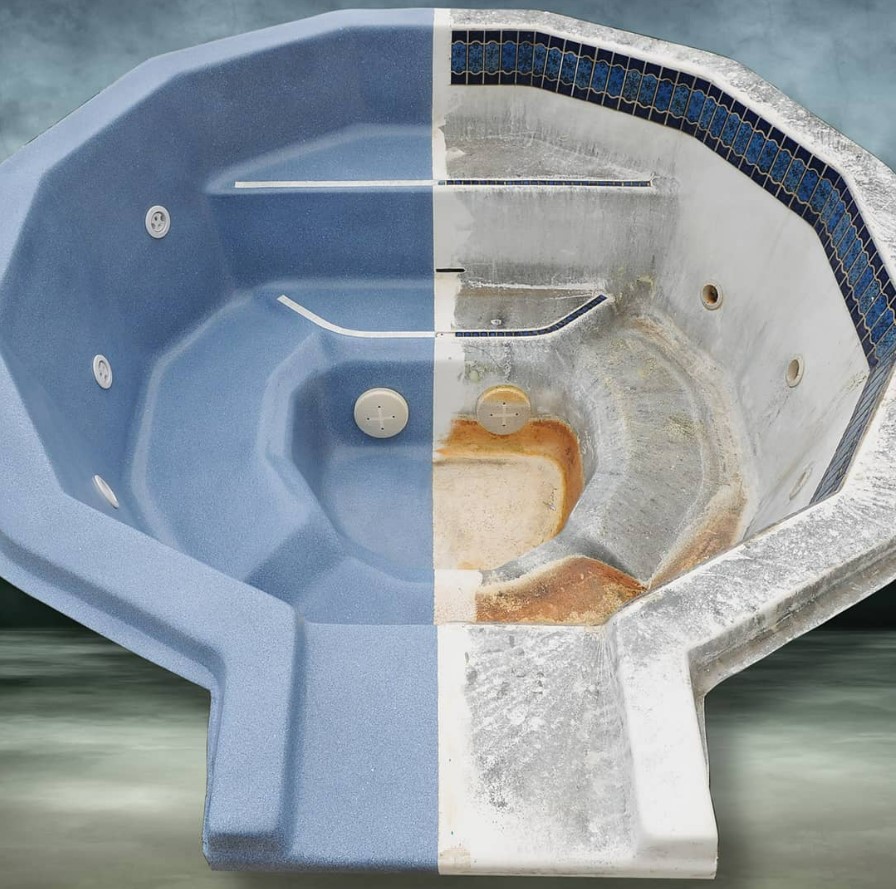
- Rough or chalky texture that scratches skin and catches on swimwear
- Fading, discoloration, or a dull, washed-out appearance
- Osmotic blisters — small bubbles forming under the gel coat
- Stains that don’t respond to chemicals or brushing
- Constant water balance problems that require heavy chemical adjustments
If you’re seeing two or more of these issues, your pool is likely ready for resurfacing. The good news? Resurfacing is almost always smarter than full replacement, and modern coatings last far longer than the original gel coat.
What Are Your Fiberglass Pool Resurfacing Options in NC?
North Carolina homeowners typically hear about three main pool resurfacing approaches. Not all are created equal.
Pool Paint or Epoxy Coatings: This is the cheapest upfront option. These coatings sit on top of the surface and can look decent for a season or two. However, they tend to peel, chip, and chalk very quickly.
Plaster Over Fiberglass: While some contractors apply plaster directly over fiberglass, we strongly advise against this practice. The poor bond between these materials inevitably results in cracking, delamination, and structural failure.
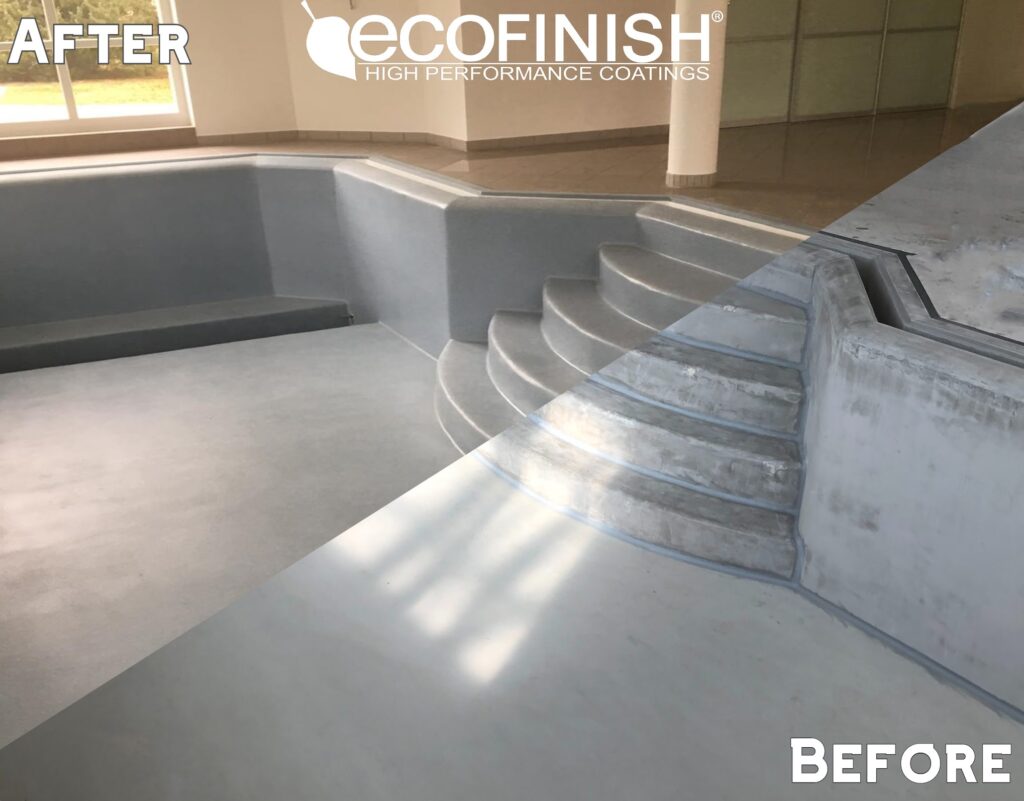
ecoFINISH: Far and away the best option. ecoFINISH is a thermoplastic aquatic coating that is thermally sprayed directly onto the pool shell. It bonds at a molecular level, creating a seamless, non-porous finish that dramatically outperforms paint and plaster. The surface is smooth, stain-resistant, algae-resistant, and available in over 20 colors. No peeling. No chalking. No constant scrubbing.
How Much Does Fiberglass Pool Resurfacing Cost in North Carolina?
Cost varies based on pool size, surface condition, any needed structural repairs, and the product chosen.
- Basic epoxy paint jobs are cheaper initially but require frequent reapplication.
- Premium thermoplastic coatings like ecoFINISH cost more upfront but deliver far better long-term value through durability and reduced maintenance.
The best way to know exactly what your project will cost is to get a free on-site estimate from SUNDEK of North Carolina.
Why ecoFINISH Outperforms Traditional Pool Finishes
Most traditional finishes eventually fail because they don’t address the core issues. ecoFINISH stands apart because of these key advantages:
- Non-porous surface — Algae, minerals, and chemicals can’t penetrate, meaning less scrubbing and easier water balance.
- Long-lasting color — Colors stay vibrant without the chalky fade common in plaster.
- Smooth, comfortable finish — No more rough surfaces that scratch skin or snag swimwear.
- Fast turnaround — Most jobs are completed in 2–4 days, with the pool refillable after just 24 hours.
What the Resurfacing Process Actually Looks Like
Many homeowners worry about disruption. Here’s SUNDEK’s typical process:
- Free on-site evaluation — Detailed inspection and written estimate (no charge).
- Surface preparation — Thorough cleaning, structural repairs if needed, and mechanical profiling for optimal bonding.
- ecoFINISH application — Thermoplastic powder is thermally sprayed for a seamless, molecular-level bond.
- Cure and walkthrough — Final inspection with the homeowner. Pool can usually be filled 24 hours after the final coat.
Most residential projects are completed in under a week.
SUNDEK of North Carolina Serves the Whole Triangle and Beyond
SUNDEK of North Carolina has been in the concrete and pool coatings business since 1970. Based in Wake Forest, they serve the entire Triangle region and surrounding communities, including:
- Raleigh
- Durham
- Chapel Hill
- Greensboro
- Cary
- Apex
- Wake Forest
- Garner
- Holly Springs
- Fuquay-Varina
- Clayton
(Reach out if you’re nearby but not on the list — their service area is extensive.)
Is Resurfacing Worth It?
For most North Carolina homeowners with a deteriorating fiberglass pool, yes — resurfacing with a quality product like ecoFINISH is usually the smartest move. It’s far less expensive and disruptive than full replacement, delivers a better-performing surface, and dramatically reduces ongoing maintenance.
One customer summarized it well: “Their product is far superior to the traditional marcite plaster surfaces that are harder to maintain and have a short lifespan.”
Get a Free Estimate on Fiberglass Pool Resurfacing in North Carolina
Don’t wait until small problems become big ones. SUNDEK of North Carolina offers free, no-obligation on-site estimates.
Call (919) 670-1550 or email sales@sundeknc.com.
SUNDEK of North Carolina 2717 Leighton Ridge Dr #101 Wake Forest, NC 27587
Ready for a pool that looks and performs like new — with far less maintenance? Contact SUNDEK today.
Share
(opens in a new tab)
(opens in a new tab)
(opens in a new tab)
(opens in a new tab)