
The pool cover is going on, the patio furniture is coming in, and most North Carolina homeowners won’t think about their pool deck again until May. That’s the problem.
A full summer of sun, heat, storms and bare feet leaves concrete worn and cracked. Winter then pushes water into those cracks and freezes it, night after night. A small hairline crack in October can be a broken, flaking section by spring.
Fall is a great time of year to stop that cycle. Here’s what summer and winter do to your pool deck, the signs to look for, and why a Sundek resurfacing system is the best way to protect it.
What North Carolina Weather Does to Pool Deck Concrete
North Carolina puts concrete through two very different kinds of stress each year.
Summer wears the surface down. Months of direct sun fade color and break down old sealers. The Triangle’s muggy season runs from May through October, and Raleigh averages 25 muggy days in July alone. Moisture that stays in and around the slab feeds mildew and dark staining. Add pool chemicals, splash-out and heavy foot traffic, and the top layer of the concrete takes a beating.
Winter breaks it apart. Raleigh’s average January low is 33°F, so winter nights hover right around freezing. Water that seeps into cracks and pores expands by about 9 percent when it freezes, according to the Federal Highway Administration. Each freeze widens the crack a little more. After a season of these cycles, small cracks grow and the surface starts to flake off in chips, a problem called spalling.
The summer damage opens the door, and the winter damage walks through it. Sealing up the surface in fall stops water from getting in before the freezing starts. For a closer look at each damage type, see 5 Common Types of Concrete Damage and What They Mean for Your Surface.
Signs Your Pool Deck Needs Attention Before Winter
Take a walk around your pool this week and check for these:
- Hairline or spreading cracks. Any crack lets water in. Cracks that have grown since spring will grow faster once freezing starts.
- Chipping or flaking. Small pieces breaking off the surface, especially near the pool edge or downspouts, is early spalling.
- Faded, blotchy color. Sun-bleached concrete has lost its protective sealer and absorbs more water.
- Dark stains or mildew. Shaded, damp areas that stay dark after cleaning hold moisture in the slab.
- Slippery spots. Worn, smooth concrete gets slick when wet, and winter rain and fallen leaves make it worse.
- Rough, gritty texture. A surface that feels like sandpaper underfoot has lost its top layer.
If you see two or more of these, your deck is a good candidate for resurfacing this fall.
Why Fall Can be the Right Time to Resurface
The weather is on your side. Resurfacing needs clear, dry days. According to WeatherSpark, Raleigh averages highs around 72°F in October and 63°F in November, and November is the driest month of the year at 2.7 inches of rain. Compare that to August, the wettest month, with muggy air most days.
Your pool is closed anyway. A typical Sundek installation takes 2 to 4 days, depending on size, condition and weather. In fall, that time comes out of the off-season instead of your family’s summer.
You protect the deck before freezing starts. Repairing cracks and sealing the surface now keeps water out of the concrete through winter. Wait until spring and you may be paying to fix damage that winter caused.
You beat the spring rush. Once the weather warms, everyone wants their pool deck done before Memorial Day and schedules fill up. Book in fall and your deck is ready for the first warm weekend.
Why Sundek Is the Best Resurfacing Option for North Carolina Pool Decks
Paint and store-bought sealers can make a deck look better for a season, but they sit on top of the concrete and peel once water gets underneath. Sundek resurfacing systems create a new, bonded overlay that becomes part of the surface. The result is a seamless finish that won’t peel or separate.
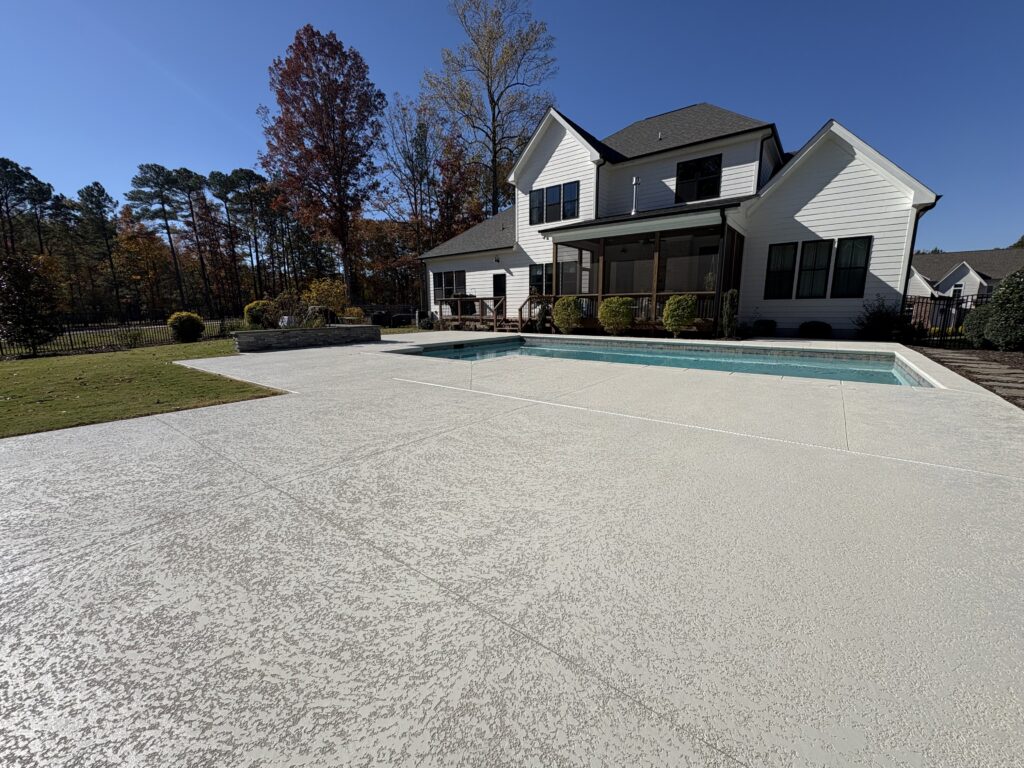
Classic Texture
Classic Texture is Sundek’s signature pool deck finish. It’s an acrylic, water-based coating that we spray onto your existing concrete and knock down with a trowel to create a textured surface.
- Slip resistance built in. The knockdown texture gives consistent grip, even when the deck is wet.
- Cooler underfoot. Classic Texture stays cooler than bare concrete, pavers, tile or epoxy, so summer afternoons are easier on bare feet.
- Built for the seasons. It holds up against UV exposure, foot traffic and seasonal wear.
- Color that lasts. Choose from 16 colors with custom blending, finished with UV-stable sealers that prevent fading.
- Custom looks. Add scorelines, borders or patterns to match your home and backyard.
The SunPlay System
For pools that see heavy use from kids, guests or rentals, the SunPlay System adds a dual-layer cushioned surface with a softer feel underfoot. It resists chemicals, UV exposure, fungal growth and abrasion, which makes it a strong fit for damp, shaded decks that tend to grow mildew. Learn more in Non-Slip Pool Deck Surfaces: Best Options to Fix Slippery Concrete.
Resurfacing Beats Replacing
Tearing out and repouring a pool deck is loud, messy and expensive. Sundek bonds to the concrete you already have, repairs the damaged areas and gives you a brand-new surface for a fraction of the disruption.
Protect Your Pool Deck Before Winter
A few clear, dry fall days are all it takes to seal up summer damage and head into winter with a deck that’s safe, cool and good-looking for years to come.
Sundek of North Carolina resurfaces pool decks across Raleigh, Durham, Chapel Hill, Cary, Apex, Wake Forest, Holly Springs, Fuquay-Varina, Garner, Clayton, Greensboro and Wilmington.
Share
(opens in a new tab)
(opens in a new tab)
(opens in a new tab)
(opens in a new tab)