
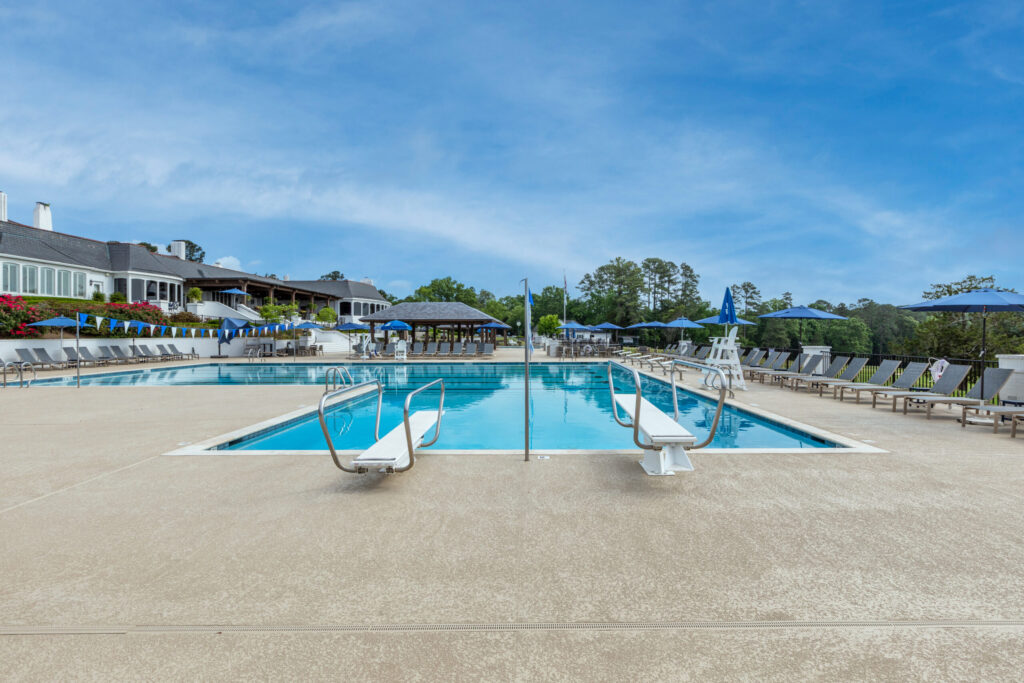
Commercial pool restoration with ecoFINISH gives a worn pool a smooth, non-porous polymer finish without tearing the pool out. Damaged plaster is replastered first, because ecoFINISH coats a surface and can’t replace one. Then the coating is thermally sprayed on, and the pool can be filled just 24 hours after the final coat.
That matters when a pool serves an HOA, a country club, a hotel or a swim team. Every week the pool sits empty, members and guests notice. At SUNDEK of North Carolina, we restore commercial pools across the Triangle with ecoFINISH. We plan each job around two things: a sound surface under the coating and the state’s rules for public pool finishes.
Key Takeaways
- ecoFINISH is a polymer coating that goes over a sound surface. Damaged plaster gets replastered first, because a coating on a failing surface fails with it.
- The ecoFINISH coating doesn’t need the two-week “Hot Start” that plaster finishes need, and the pool can be filled 24 hours after the final coat.
- North Carolina requires public pool finishes to be light-colored, smooth and cleanable, with slip-resistant surfaces on steps, ramps and shallow areas.
- A slip-resistant ecoFINISH application covers steps, benches and beach entries using the same coating.
- Some renovations need health department plan approval, so check with your county before you set dates.
Signs a Commercial Pool Needs Restoration
Commercial pools wear out faster than backyard pools. They run longer seasons, see heavy daily use and get more chemical treatment. Watch for these signs:
- Rough spots that scrape swimmers’ feet and hands
- Stains that come back soon after an acid wash
- Etched or pitted plaster where algae keeps taking hold
- Cracks, hollow-sounding spots, or plaster flaking off the shell
- A chalky, faded surface in a fiberglass spa or wading pool
A rough, porous surface is also harder to keep clean. That’s a problem for any pool that has to pass health inspections.
Restoration and remodeling aren’t the same job. Commercial pool remodeling changes the pool itself, such as its shape, depth or plumbing. Restoration renews the surface: repairing or replastering what’s damaged, then finishing it. Most aging commercial pools need pool resurfacing, not a rebuild.
How ecoFINISH Handles Commercial Pool Restoration
ecoFINISH is a thermoplastic polymer coating that we apply with specialized air-powered equipment. It bonds to the surface underneath and quickly cures into a smooth, non-porous finish, so that surface has to be sound. aquaBRIGHT is the ecoFINISH line for concrete pools, and polyFIBRO is the line for fiberglass.
Surface Prep and Repairs
We start by draining the pool and inspecting the surface. ecoFINISH is a coating, not a repair. If the plaster under it is cracked, hollow or flaking, the coating will eventually fail along with it. So when the existing plaster is damaged, we replaster first, then prepare the new surface so the coating can bond. Good prep is what makes the new finish last, so we don’t cut it short.
The Thermal-Spray Application
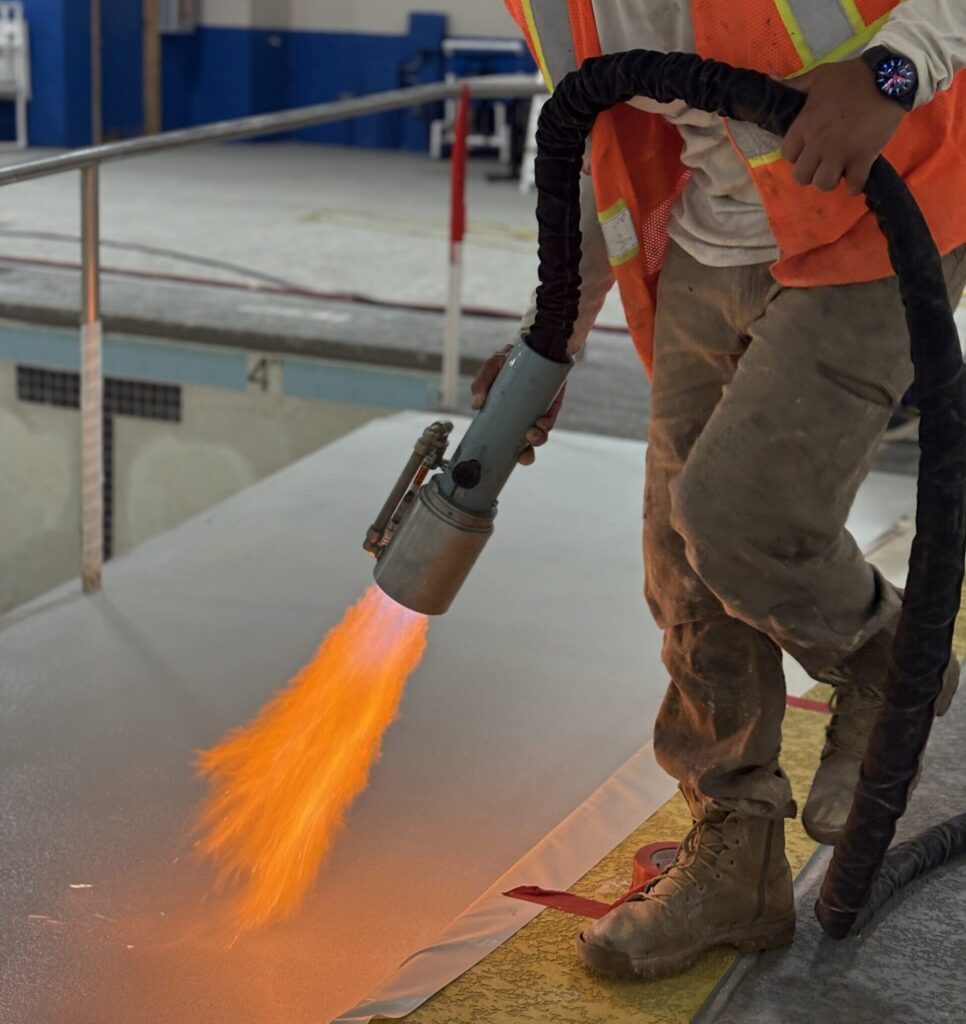
We thermally spray the ecoFINISH coating onto the prepared surface, and it cures quickly. The manufacturer says its finishes don’t need the two-week “Hot Start” that traditional masonry finishes require, which means less downtime for a commercial pool (ecoFINISH Commercial Coatings). You can start filling the pool 24 hours after the final coat.
Slip-Resistant Steps, Benches and Entries
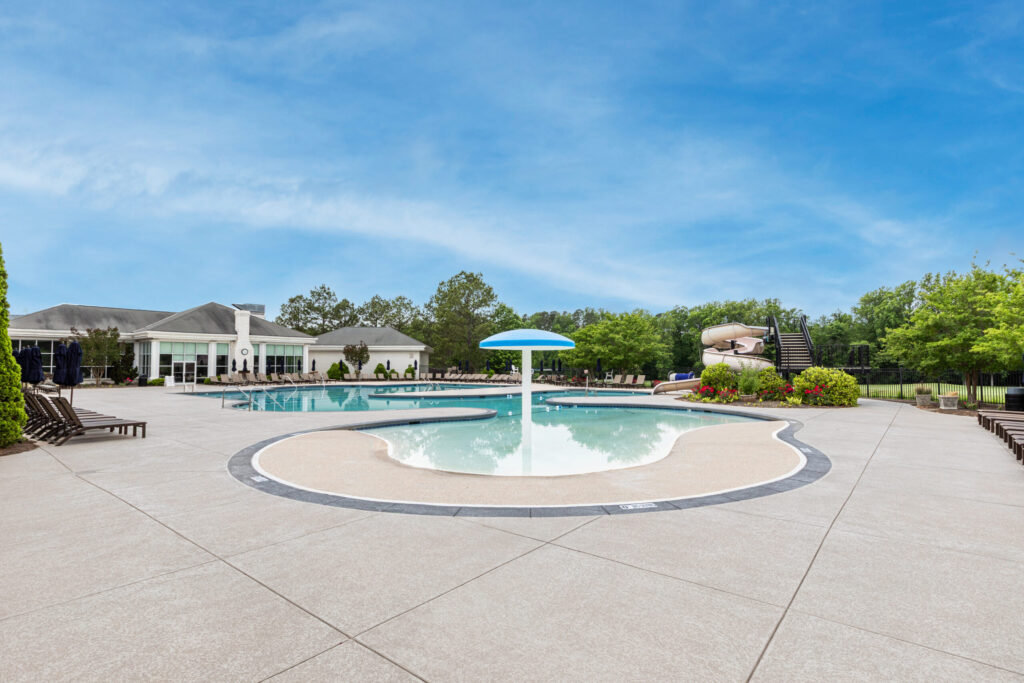
Steps, benches, beach entries, zero-entry areas, slide entrances and wading pools take the most foot traffic. ecoFINISH offers a slip-resistant application for these spots. It uses the same coating materials with a special installation technique and adds no grit or particles.
Meeting North Carolina’s Pool Finish Rules
North Carolina sets clear standards for public pool finishes. Under 15A NCAC 18A .2514, a public pool must have:
- A white or light-colored finish, or one shown by reflectance testing to reflect more than 50 percent of visible light
- Materials that are inert, non-toxic, impervious and permanent, with a smooth and cleanable surface
- Slip-resistant surfaces on steps, ramps and pool bottoms in water less than three feet deep
ecoFINISH lines up with each of these:
- An independent lab has tested the light reflective value (LRV) of ecoFINISH’s commercial colors.
- The finish is smooth and non-porous, so it doesn’t hold dirt the way porous plaster can.
- The slip-resistant application covers steps and shallow footing areas.
According to ecoFINISH’s aquatic testing page, most of its coatings are IAPMO R&T classified as NSF/ANSI 61 compliant. Ask to see the tested values for any color you’re considering, and request a physical sample before you decide.
Some projects also need plan approval. North Carolina’s rules require plans for a remodeled public pool to be approved before work starts, and the state responds to plans within 30 days. County health departments describe a remodel as work that disrupts most of the pool shell or deck, changes the pool’s profile, or redesigns its hydraulic system. Whether your resurfacing counts depends on its scope, so call your county’s environmental health office before you schedule.
Plaster Alone vs Plaster With an ecoFINISH Coating
When a commercial pool’s plaster is damaged, replastering is part of the job either way. The real choice is whether swimmers end up on bare plaster or on an ecoFINISH coating over it. Bare plaster is porous, so it holds stains and algae, and repeated acid washes wear it down. The table compares the two, using the manufacturer’s information.
| Plaster finish alone | Plaster with an ecoFINISH coating | |
|---|---|---|
| Surface swimmers touch | Porous, cement-based | Non-porous polymer |
| Start-up | Two-week Hot Start for traditional masonry finishes | No Hot Start for the coating; fill 24 hours after the final coat |
| Acid washing | Each wash removes a thin layer of plaster | The coating can’t be damaged by acid washing |
| Water chemistry | Fresh plaster affects pH balance | pH-neutral surface, so fewer chemicals may be needed |
| Slip resistance | Depends on the finish texture | Slip-resistant application for steps, benches and entries |
| Colors | White or tinted plaster | Wide palette, including light commercial colors with tested LRV |
With proper water chemistry maintenance, ecoFINISH can last well over a decade. If your board is tired of re-treating and acid washing a porous finish, that’s the case for commercial pool resurfacing with an ecoFINISH coat on top.
A Durham Example: The Grove Park Community Pool
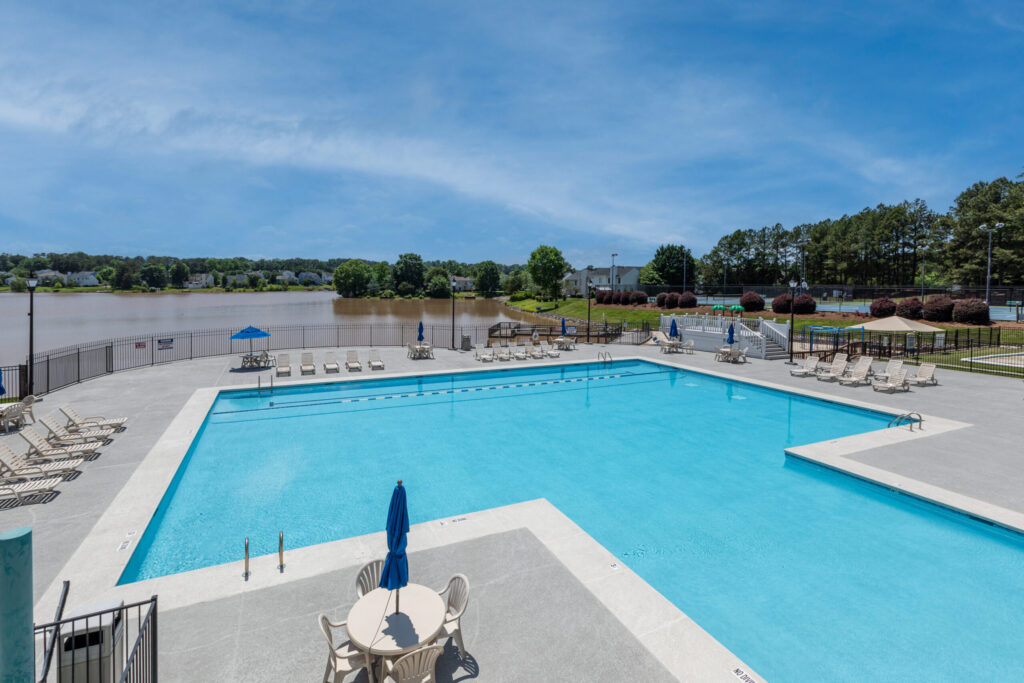
In 2024, SUNDEK of NC restored the Grove Park community pool in Durham, an HOA pool of more than 3,500 square feet. Our team handled the project from start to finish: surface prep, repairs, and an aquaBRIGHT application across the entire pool in the color Blue Mist. The pool came out cleaner, more modern and better able to handle heavy use during the season.
The client summed it up: “The outcome of the pool and deck transformation was truly impressive and exceeded our expectations.”
Read the Grove Park project spotlight on ecoFINISH’s site, or browse more commercial pool projects in our showroom. If your deck is worn too, we can restore it in the same project with our pool deck resurfacing systems.
Frequently Asked Questions
How long does commercial pool restoration with ecoFINISH take?
The ecoFINISH coating cures quickly, and the pool can be filled 24 hours after the final coat. The rest of the schedule depends on the pool’s size and how much replastering and repair the surface needs, so every commercial project gets its own timeline. Ask about scheduling when you book your free estimate.
Do I need health department approval to resurface a commercial pool in North Carolina?
It depends on the scope. Plans for a remodeled public pool must be approved before work begins. A remodel generally means disrupting most of the shell or deck, changing the pool’s profile or redesigning its plumbing. Your county’s environmental health office decides whether your project counts, so check with them before you set dates.
Can ecoFINISH be used on a commercial spa?
Yes. Commercial spas are typically drained about every two weeks, and the manufacturer notes they’re prone to staining and etching. An ecoFINISH surface resists stains, can’t be damaged by acid washing and doesn’t need a Hot Start, which suits a spa that’s drained and refilled often.
Will ecoFINISH work on our pool?
ecoFINISH works on concrete, gunite, shotcrete, fiberglass, steel and aluminum pools, but it isn’t designed for vinyl liner pools. Concrete pools get aquaBRIGHT, and fiberglass pools get polyFIBRO. Either way, the surface underneath has to be sound, so we replaster or repair any damage first.
Bring Your Commercial Pool Back Without Tearing It Out
A worn commercial pool usually needs a new surface, not a new pool. With damaged plaster replastered and an ecoFINISH coat on top, you get a smooth, light-colored finish built for heavy use. SUNDEK of North Carolina is an ecoFINISH Installer serving Raleigh, Durham, Chapel Hill, Cary and the rest of the Triangle, plus Greensboro and Wilmington. Book a free estimate or call (919) 670-1550 to talk through your pool.
Share
(opens in a new tab)
(opens in a new tab)
(opens in a new tab)
(opens in a new tab)